Top Palm Oil Producing States in Nigeria
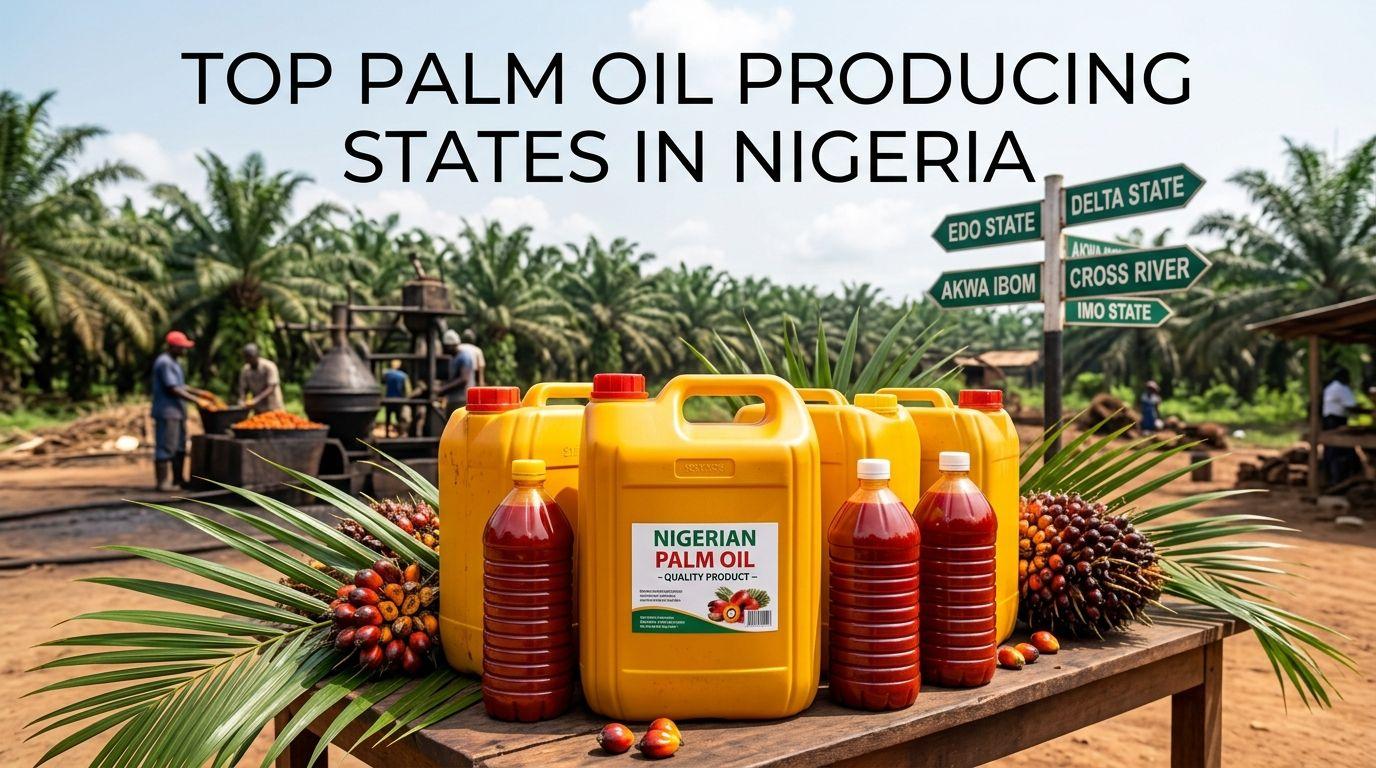
Nigeria has a long-established oil palm industry, with production spread across several states, particularly in the southern part of the country, including Edo, Akwa Ibom, Cross River, Ondo, Abia, Imo, Delta, Rivers and Enugu. The industry includes smallholder farmers, commercial plantations, processors and other businesses involved in the palm oil value chain.
In 2025, Nigeria's palm oil production was estimated at 1.57 million tonnes, according to figures reported by BusinessDay citing the Council of Palm Oil Producing Countries (CPOPC). However, comparable and consistently published production figures for every Nigerian state are not readily available for the same year.
This means identifying the country's leading palm oil producing states requires looking at available production evidence alongside recent agricultural, processing and commercial activity.
Major Palm Oil Producing States in Nigeria
The states below are among the country's major oil-palm producing areas based on available production information and recent industry evidence. Because state-level production figures are not consistently reported for the same year, the list should not be treated as a definitive 2026 ranking.

1. Edo State
Edo has a well-established oil-palm industry, with both large commercial plantations and smaller-scale agricultural production contributing to the state's output.
The state has a particularly strong commercial presence through companies such as Okomu Oil Palm Company and Presco. Their operations include oil-palm cultivation, harvesting, milling and the processing of palm oil and other palm products.
In 2024, the Edo State Government announced that the state had become Nigeria's leading oil-palm-producing state, contributing about 12% of national palm-oil production. The announcement also identified Akwa Ibom and Cross River among the country's other leading oil-palm producing states.
Edo's position in the industry is also supported by established commercial infrastructure, including large plantations, processing mills and outgrower arrangements. These operations connect primary production with industrial processing and help support the wider oil-palm economy in the state.
2. Akwa Ibom State
Akwa Ibom is another long-established oil-palm producing state, with cultivation taking place across different parts of the state and supporting agricultural activity and local palm-oil supply.
Its oil-palm sector includes production from smallholder farms alongside larger agricultural and processing operations. This gives the state a broad production base within Nigeria's oil-palm industry.
Akwa Ibom also has scope for further development across the value chain, particularly through expanded cultivation, improved processing and greater production of palm-oil derivatives.
The state's combination of established cultivation and processing activity makes it an important source of palm oil and related products for domestic and industrial markets.
3. Cross River State
Cross River is an established oil-palm producing state with significant potential for further expansion. Recent government programmes and private-sector investment are reshaping the sector, particularly through plantation rehabilitation, improved planting materials and larger commercial operations.
A major part of this effort is the Cross River Oil Palm Development Initiative (CRODI). The state government procured 3.5 million improved oil-palm sprouted nuts from the Nigerian Institute for Oil Palm Research (NIFOR) for distribution to farmers. The programme is intended to replace ageing, less productive oil-palm varieties and improve future yields.
The scale of the replanting programme is significant. The improved planting materials could support the replanting of about 24,000 hectares of ageing plantations across the state. By October 2025, Cross River had received 825,000 sprouted nuts in batches from NIFOR, with 710,466 already distributed to farmers.
Cross River has also attracted major commercial investment. In December 2025, Presco Plc announced the acquisition of 10,000 hectares across the Nsadop and Boki plantations. The expansion is expected to increase the company's production footprint and provide a broader raw-material base for higher processing and refining throughput.
In March 2026, the Cross River State Government formally handed the Boki and Nsadop estates to Presco for redevelopment, following the earlier agreement between the state and the company.
These developments make Cross River particularly notable for the future growth of Nigeria's oil-palm sector, with public investment in smallholder production taking place alongside large-scale plantation development.
4. Ondo State
Ondo is one of Nigeria's established oil-palm producing states, with Okitipupa standing out as a historically important production area. The local industry includes farmers and processors supplying palm oil to markets within and beyond the area, building on a long-standing plantation base centred on Okitipupa Oil Palm Plc.
Recent activity has also strengthened the state's processing capacity. In January 2026, an integrated palm-oil and palm-kernel processing factory was commissioned in Akure, the state capital, with a reported capacity of 5,000 litres of palm oil per day.
The development adds to Ondo's existing production base by providing additional capacity to process oil palm locally. This makes the state notable not only for cultivation but also for the continued development of its palm-oil processing infrastructure.
5. Abia State
Abia is an established oil-palm producing state in southeastern Nigeria, with oil palm contributing to agricultural activity across several farming communities.
The state's oil-palm sector was once a major part of the wider Eastern Region economy but has declined over recent decades. Abia's government has recently moved to reverse this, with Governor Alex Otti announcing in March 2026 that the state plans to sign a $200 million Memorandum of Understanding with Presco Plc to develop a 14,000-hectare oil-palm plantation and integrated processing hub in the state.
Ozuitem in Bende LGA, Abam in Arochukwu LGA and Ulonna in Umuahia North LGA were identified as potential sites. The project is structured under a Public-Private Partnership framework and is expected to create more than 5,000 jobs while strengthening Abia's palm-oil processing capacity.
Abia's combination of established cultivation and this planned large-scale investment makes it an increasingly important part of Nigeria's wider oil-palm industry, particularly in the southeastern production belt.
6. Imo State
Imo is an established oil-palm producing state in southeastern Nigeria, home to Adapalm, one of Nigeria's oldest and largest oil-palm plantations. Established in 1953 in Ohaji/Egbema Local Government Area, Adapalm has a long production history, and recent state government efforts have focused on reviving the plantation and its processing operations.
Beyond Adapalm, the state's palm oil production is also supported by smallholder farms and local processing businesses across Imo's farming communities. Imo is also one of several states participating in Nigeria's Special Agro-Industrial Processing Zones (SAPZ) programme, a federally backed initiative supporting agro-processing infrastructure, including an agro-industrial hub under development in Oloshi.
With continued farming activity, an established plantation base and broader agro-industrial investment, Imo remains an important part of Nigeria's southeastern oil-palm belt.
7. Delta State
Delta is a long-established oil-palm producing state in southern Nigeria, with cultivation spread across rural communities and smallholder farming areas.
The state has recently expanded its oil-palm processing capacity and attracted large-scale investment. In February 2024, Norsworthy Farms and Agro Allied Industries inaugurated a 10-metric-tonne-per-hour palm oil mill at Akwukwu-Igbo in Oshimili North Local Government Area through a public-private partnership with the state government.
In March 2025, the Delta State Government, through the long-running Delta State Commercial Oil Palm Plantations Growers Cooperative (DELCOM), launched a Land Bank and Agric Data initiative aimed at attracting close to $1 billion in development finance over the next decade. The initiative includes a stated commitment of 100,000 hectares of farmland to the Central Bank of Nigeria's Oil Palm Development Initiative.
Delta's combination of established smallholder cultivation, new processing infrastructure and large-scale state-backed investment makes it an important part of Nigeria's broader palm-oil producing belt.
8. Rivers State
Rivers is another established oil-palm producing state in southern Nigeria, where cultivation spans smallholder farming and commercial agro-industrial operations.
The state's commercial activity centres on the Ubima and Elele estates in Ikwerre Local Government Area. Originally established as Risonpalm, the estates were acquired by Siat Nigeria Limited from the Rivers State Government in 2011. Presco Plc, Nigeria's largest fully integrated palm-oil producer, later acquired Siat Nigeria, integrating the Rivers estates into its wider portfolio of regional plantations and processing facilities.
These large-scale operations reinforce Rivers' role as a key contributor to Nigeria's national oil-palm industry.
9. Enugu State: An Emerging Palm Oil Producer
Enugu has a long history of oil-palm cultivation, but its commercial production base has been less developed than those of some of Nigeria's established leading palm-oil states.
The state is now seeing renewed investment in the sector. Enugu United Palm Products Limited (UPPL), a public-private partnership between Pragmatic Palms Limited and the Enugu State Government, has spent the past two years rehabilitating three previously dormant plantations: Ibite-Olo, Umulokpa and Ugwu-Oba, located in Ezeagu, Uzo-Uwani and Oji River Local Government Areas. The company has replanted more than 1,000 hectares of ageing oil-palm trees.
In September 2026, UPPL announced that it had reached commercial-scale production, selling palm-oil products under its Enugu Vegetable Oil Product (EVOP) brand. The company also committed a further $2.2 million to develop a refinery and industrial complex for processing crude palm oil into olein, stearin and refined palm-kernel oil.
These developments position Enugu as an emerging oil-palm producer, with plantation rehabilitation and new processing investment expanding its role in Nigeria's palm-oil industry.
Latest Palm Oil Production Figure for Nigeria
Nigeria's palm oil production reached an estimated 1.57 million tonnes in 2025, according to figures reported by BusinessDay citing the Council of Palm Oil Producing Countries (CPOPC).
The 2025 figure reflects continued growth in national production, supported by smallholder farming alongside investment in commercial plantations, processing facilities and oil-palm development programmes.
However, national production figures should not be used to assume that individual states have followed the same growth pattern. State-level production data is not consistently reported for the same year, which makes direct comparisons between states difficult.
Which State Produces the Most Palm Oil in Nigeria?
Edo State is widely recognised as one of Nigeria's leading commercial palm-oil producers. In 2024, the Edo State Government announced that the state accounted for roughly 12% of national production, supported by extensive commercial plantations and major producers such as Presco Plc and Okomu Oil Palm Plc. Akwa Ibom, Cross River and Delta are also among Nigeria's important oil-palm producing states.
However, the 12% figure should not be treated as a definitive 2026 state-level ranking. Comparable annual production data for all Nigerian states is not consistently published for the same period, making precise state-by-state comparisons difficult.
Based on the available evidence, Edo is the strongest answer to which state produces the most palm oil in Nigeria, while Akwa Ibom, Cross River, Ondo and Delta remain important contributors to the country's overall production.
Which State Has the Best Palm Oil in Nigeria?
There is no single Nigerian state that can objectively be said to produce the “best” palm oil. Quality depends more on factors such as fruit variety, harvesting time, processing method, storage and handling than on the state of origin.
States such as Edo, Akwa Ibom, Cross River, Ondo, Abia, Imo, Delta and Rivers all have established oil-palm production, but quality can vary between producers and processing facilities, even within the same state.
For culinary and artisanal use, buyers may consider factors such as the oil's colour, flavour, aroma, freshness and processing method.
For industrial and commercial use, buyers are more likely to assess measurable specifications such as Free Fatty Acid (FFA) content, moisture, impurities, processing grade and oxidative stability, depending on the intended application.
For commercial buyers, evaluating the specific supplier and product specifications is therefore more reliable than choosing palm oil based solely on its state of origin.
How to Check Palm Oil Quality
- Free Fatty Acid (FFA) content: An important indicator of oil quality and processing conditions.
- Moisture and impurities: Excess moisture and contaminants can affect storage stability and product quality.
- Processing method: Determine whether the product is crude, refined or otherwise processed for a specific application.
- Product specifications: Check the required grade and technical specifications for the intended use.
- Regulatory compliance: Confirm that the supplier meets the applicable Nigerian and destination-market requirements.
Once you have identified the quality specifications you need, it is important to evaluate individual suppliers before making a purchase. Our guide on the Top 20 verified palm oil suppliers in Nigeria 2026 can help you identify potential suppliers to consider.
Frequently Asked Questions
Which state produces the most palm oil in Nigeria?
Based on available evidence, Edo State is currently the strongest answer. In 2024, the Edo State Government reported that Edo accounted for about 12% of Nigeria's palm-oil production. However, comparable annual production data for all states is not consistently published, so this should not be treated as a definitive 2026 ranking.
What are the top palm oil producing states in Nigeria?
The major palm-oil producing states are Edo, Akwa Ibom, Cross River, Ondo, Abia, Imo, Delta and Rivers. Enugu is also emerging as a producer following recent rehabilitation of dormant plantations and new investment in processing.
Is Edo State the largest palm oil producer in Nigeria?
Edo is widely recognised as a leading palm-oil producer and was described by the Edo State Government in 2024 as Nigeria's leading oil-palm producing state. A fully synchronised, up-to-date ranking covering all 36 states is not consistently published, so this is best viewed as the strongest available answer rather than a fixed national ranking.
Is Akwa Ibom a major palm oil producing state?
Yes. Akwa Ibom has a long-established oil-palm industry supported by smallholder cultivation and agricultural activity across the state. It is consistently identified among Nigeria's important palm-oil producing states alongside Edo and Cross River.
Which state has the best palm oil in Nigeria?
There is no objectively “best” state. Palm-oil quality depends on fruit variety, harvesting timeliness, processing method, storage and handling more than on state of origin. For commercial purchases, buyers should assess the specific supplier and product specifications, including FFA, moisture, impurities and applicable certifications, rather than relying solely on the state.
What is Nigeria's total palm oil production?
Nigeria produced an estimated 1.57 million tonnes of palm oil in 2025, according to figures reported by BusinessDay citing the Council of Palm Oil Producing Countries (CPOPC). This is a national figure; state-level production shares are not consistently reported for the same year.
Conclusion
Nigeria's palm-oil industry is spread across several major producing states, with Edo, Akwa Ibom, Cross River, Ondo, Abia, Imo, Delta and Rivers among the most established production areas. Enugu is also emerging as investment in plantations and processing continues.
For businesses looking to source palm oil, knowing where production is concentrated is only the first step. The next challenge is finding reliable suppliers, confirming product quality, comparing offers and establishing the right supply relationship.
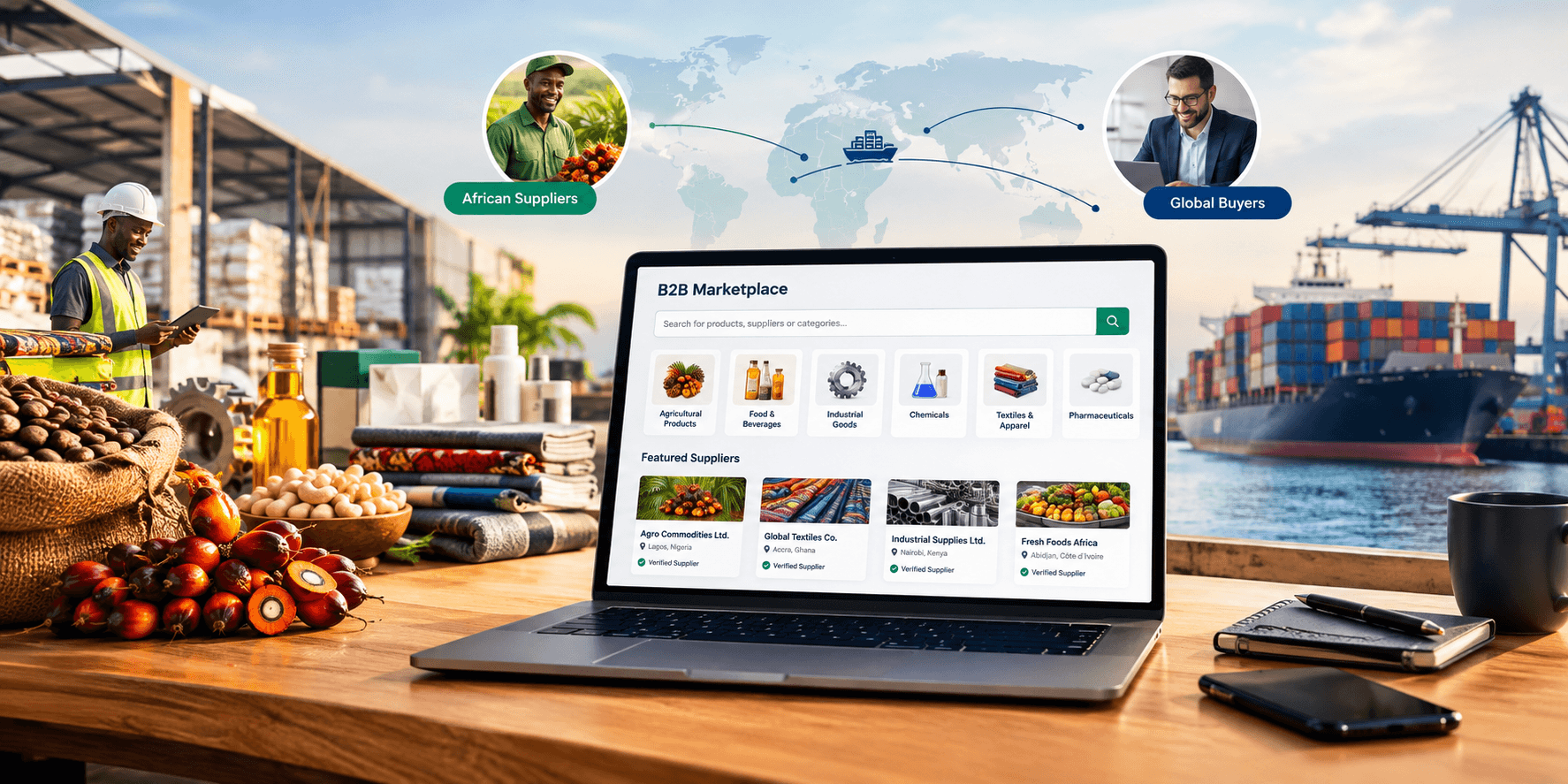
Kuraway helps buyers connect with verified African suppliers and businesses across the continent, making it easier to explore sourcing opportunities and find suppliers that match their product and purchasing requirements.
Looking to source palm oil from Nigeria? Explore verified palm oil suppliers in Nigeria on Kuraway and connect with businesses across Africa.