RFQ in Procurement: Meaning, Process and How It Works
An RFQ in procurement, or Request for Quotation, is a formal request a buyer sends to suppliers asking them to provide pricing for clearly defined goods or services. It allows procurement teams to collect and compare quotations before deciding which supplier best meets their requirements.
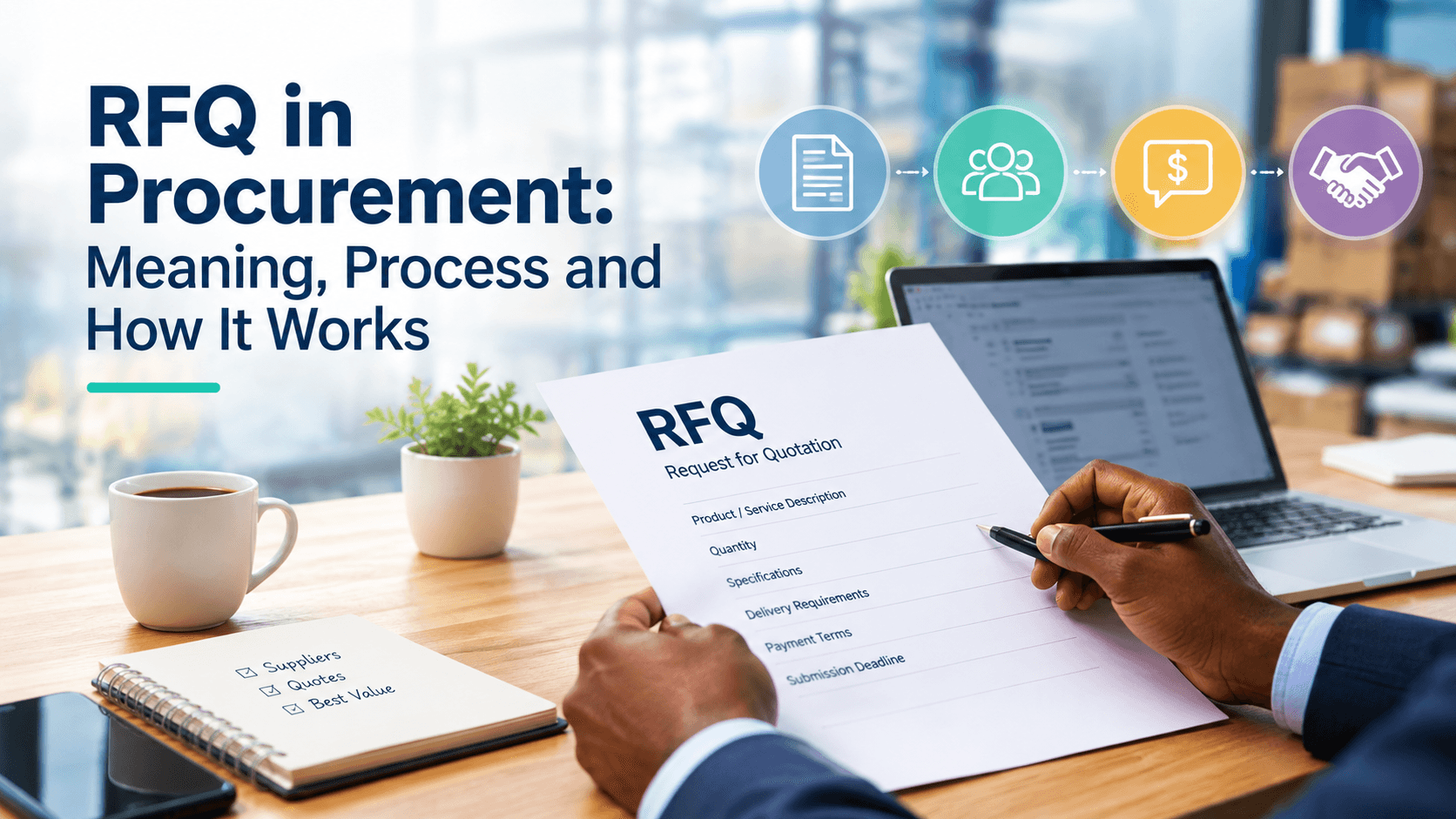
An RFQ is more than simply asking, “How much does this cost?” It usually includes details such as specifications, quantities, delivery requirements, payment terms and submission deadlines so suppliers can prepare comparable quotations.
In this guide, we explain what an RFQ means in procurement, when to use one, what an RFQ should include, how the RFQ process works and how buyers evaluate supplier quotations.
What Is an RFQ in Procurement?
RFQ stands for Request for Quotation. In procurement, it is a structured request from a buyer to one or more suppliers asking them to provide a quotation for specific goods or services.
An RFQ is normally used when the buyer already knows what they need. The product or service, quantity, specifications and other requirements can be clearly defined, allowing suppliers to quote against the same requirements.
The purpose is to make it easier for the buyer to compare supplier quotations based on factors such as price, delivery time, payment terms, quality and compliance.
An RFQ is therefore part of the wider procurement process, connecting a defined purchasing requirement with suitable suppliers before a purchasing decision is made.
When Should You Use an RFQ?
An RFQ is most useful when a buyer has a clearly defined requirement and wants to compare quotations from suitable suppliers.
For example, an RFQ may be appropriate when the buyer already knows:
- What product or service is required
- The required specifications or quality standards
- The quantity needed
- Where and when it needs to be delivered
- Any relevant payment or compliance requirements
Because suppliers are responding to the same defined requirements, their quotations can be compared more easily.
An RFQ may be less suitable when the buyer is still exploring possible solutions or does not know exactly what it needs. In those situations, an RFI (Request for Information) or RFP (Request for Proposal) may be more appropriate.
The key question is whether the buyer can clearly explain what needs to be purchased and is ready to request comparable quotations.
What Should an RFQ Include?
A good RFQ document should give suppliers enough information to understand the requirement and prepare an accurate quotation. The exact requirements vary by purchase, but an RFQ may include:
- Product or service specifications: Details of what the buyer needs, including relevant quality or technical requirements.
- Quantity: The number of units, volume or scope of work required.
- Delivery requirements: Delivery location, required date and relevant logistics instructions.
- Pricing requirements: What suppliers should include in their quotation, such as unit prices, total price, taxes or shipping costs where applicable.
- Payment terms: Proposed payment conditions or terms the supplier should consider.
- Certifications and compliance: Required licences, certifications, standards or documentation.
- Submission deadline: The date and time by which suppliers must submit their quotations.
- Submission instructions: How and where quotations should be submitted.
- Contact information: The person or team suppliers can contact for clarification.
The aim is to give suppliers enough information to quote against the same requirements, making their responses easier to compare.
How Does the RFQ Process Work?
The RFQ procurement process can vary between organisations, but it generally follows these steps:

1. Define the purchasing requirement
The buyer establishes what needs to be purchased, including the product or service, specifications, quantity, quality requirements and delivery needs.
2. Find and qualify suppliers
The buyer identifies suppliers that can meet the requirement. This may involve existing supplier relationships, referrals, industry directories, trade associations, trade fairs, direct research or B2B marketplaces.
Finding a supplier is not the same as qualifying one. Depending on the purchase, buyers may assess product capability, production capacity, MOQ, certifications, quality standards, lead times and delivery capability.
For international buyers sourcing from Africa, B2B marketplaces such as Kuraway can help buyers discover verified manufacturers, exporters, producers and distributors that may fit their requirements. Buyers should still assess each supplier against the requirements of the specific purchase before sending an RFQ.
3. Prepare and send the RFQ
The buyer prepares the RFQ with the relevant specifications, quantities, submission instructions and deadline, then sends it to selected suppliers.
4. Receive supplier quotations
Suppliers review the requirements and submit their quotations. Their responses may include pricing, delivery times, payment terms and supporting documentation.
5. Compare and evaluate responses
The buyer compares quotations against the defined evaluation criteria. Price is important, but factors such as quality, compliance, delivery and supplier capability may also affect the decision.
6. Clarify or negotiate where necessary
The buyer may contact suppliers to clarify unclear information or, where permitted, negotiate pricing, delivery terms or other conditions.
7. Select a supplier and proceed with the purchase
After evaluating the responses, the buyer selects the supplier that best meets the requirements and moves towards a purchase order, contract or other purchasing arrangement.
The RFQ process may differ depending on the organisation and type of purchase, but the basic purpose remains the same: to create a structured way to request, compare and evaluate supplier quotations.
How Do Buyers Evaluate RFQ Responses?
Receiving several quotations does not automatically mean the buyer should choose the lowest price. The best supplier is generally the one that offers the right overall value while meeting the purchasing requirements.
Depending on the purchase, buyers may compare:
- Price: Unit price and total quoted cost.
- Compliance: Whether the quotation meets the stated specifications.
- Quality: Whether the supplier can meet the required quality standards.
- Quantity and MOQ: Whether the supplier can provide the required volume.
- Delivery: Lead time, delivery location and ability to meet the required date.
- Payment terms: Whether the proposed terms are acceptable.
- Supplier capability: Production capacity and ability to fulfil the order.
- Certifications: Whether required documentation and standards are met.
- Total cost: Other costs that may affect the final purchasing decision, such as shipping or related charges.
The exact evaluation criteria depend on the product, service and organisation. The important point is that supplier selection should consider more than price alone.
How Should Suppliers Respond to an RFQ?
When a supplier receives an RFQ, it should first review the requirements carefully and confirm that it can meet them before submitting a quotation.
A strong response should generally:
- Confirm the required product, specifications and quantity.
- Provide accurate pricing and clearly state what the price includes.
- Confirm lead times and delivery terms.
- State payment terms.
- Provide requested certifications or supporting documents.
- Identify any assumptions, exclusions or requirements the supplier cannot meet.
- Follow the buyer's submission instructions.
- Submit the quotation before the deadline.
If a requirement is unclear, suppliers should ask for clarification rather than make assumptions that could affect the quotation.
RFQ vs RFI vs RFP
RFQ, RFI and RFP are different types of procurement requests. The main difference is what the buyer is trying to obtain from potential suppliers.

RFI: Request for Information
An RFI is generally used when a buyer needs more information before deciding what to purchase or which suppliers may be suitable. It can help the buyer understand available products, supplier capabilities or possible solutions.
RFQ: Request for Quotation
An RFQ is used when the buyer has a relatively clear requirement and wants suppliers to provide quotations against it. Price comparison is usually an important part of the process.
RFP: Request for Proposal
An RFP is generally used when the buyer needs suppliers to propose a solution or approach. The evaluation may involve factors beyond price, such as methodology, experience, technical capability and overall value.
Benefits and Limitations of an RFQ
An RFQ can make the purchasing process more structured when a buyer has clearly defined requirements and wants to compare several supplier quotations.
Benefits of an RFQ
- Easier price comparison: Suppliers respond to the same requirements.
- Clearer requirements: Suppliers receive specific information about what the buyer needs.
- Competitive pricing: Multiple suppliers can encourage competitive quotations.
- Structured evaluation: Buyers can assess responses against defined criteria.
- Better documentation: The RFQ and responses provide a record of the purchasing process.
Limitations of an RFQ
An RFQ is not suitable for every procurement situation. Poorly defined requirements can result in quotations based on different assumptions, making comparison difficult.
An RFQ can also place too much emphasis on price if buyers overlook quality, capability or delivery. For complex purchases where suppliers need to propose different solutions, an RFP may be more appropriate.
Frequently Asked Questions About RFQs
What is RFQ and RFI?
An RFQ (Request for Quotation) asks suppliers to provide pricing for clearly defined goods or services. An RFI (Request for Information) is used to gather information about suppliers, products, capabilities or available solutions before making a purchasing decision.
What is the difference between RFP and RFQ?
An RFP (Request for Proposal) asks suppliers to propose how they would meet a buyer's requirements, while an RFQ focuses on obtaining quotations for a clearly defined requirement. RFP evaluations can involve factors such as approach, experience and technical capability, while price comparison is typically more central to an RFQ.
What is RFP in procurement?
RFP stands for Request for Proposal. In procurement, it is a formal request asking suppliers to propose a solution for a defined business requirement. It is generally used when the buyer needs to evaluate more than just price.
What comes first, RFI or RFQ?
An RFI generally comes before an RFQ when the buyer still needs information about the market, suppliers or available solutions. Once the requirement is sufficiently defined, the buyer may issue an RFQ to obtain comparable quotations. Not every procurement process requires an RFI.
How to write a good RFQ?
A good RFQ clearly explains what the buyer needs and gives suppliers enough information to prepare accurate, comparable quotations. It should normally include specifications, quantity, delivery requirements, pricing instructions, payment terms, required documentation, submission deadline and contact information.
Conclusion
An RFQ gives buyers a structured way to request and compare quotations when their purchasing requirements are clearly defined. It helps procurement teams evaluate suppliers based on price and other factors such as quality, compliance, delivery and capability.
However, an effective RFQ starts before the request is sent. Buyers first need to identify and qualify suppliers that can meet their requirements.
For international buyers sourcing products from Africa, Kuraway provides a marketplace for discovering verified African manufacturers, exporters, producers and distributors.
Looking to source from Africa? Request quotations from verified suppliers on Kuraway and find suppliers that match your purchasing requirements. If you are an African supplier, you can also create an account on Kuraway to showcase your products to international buyers looking for suppliers.